After the Arrest
Inside an Immigration Court
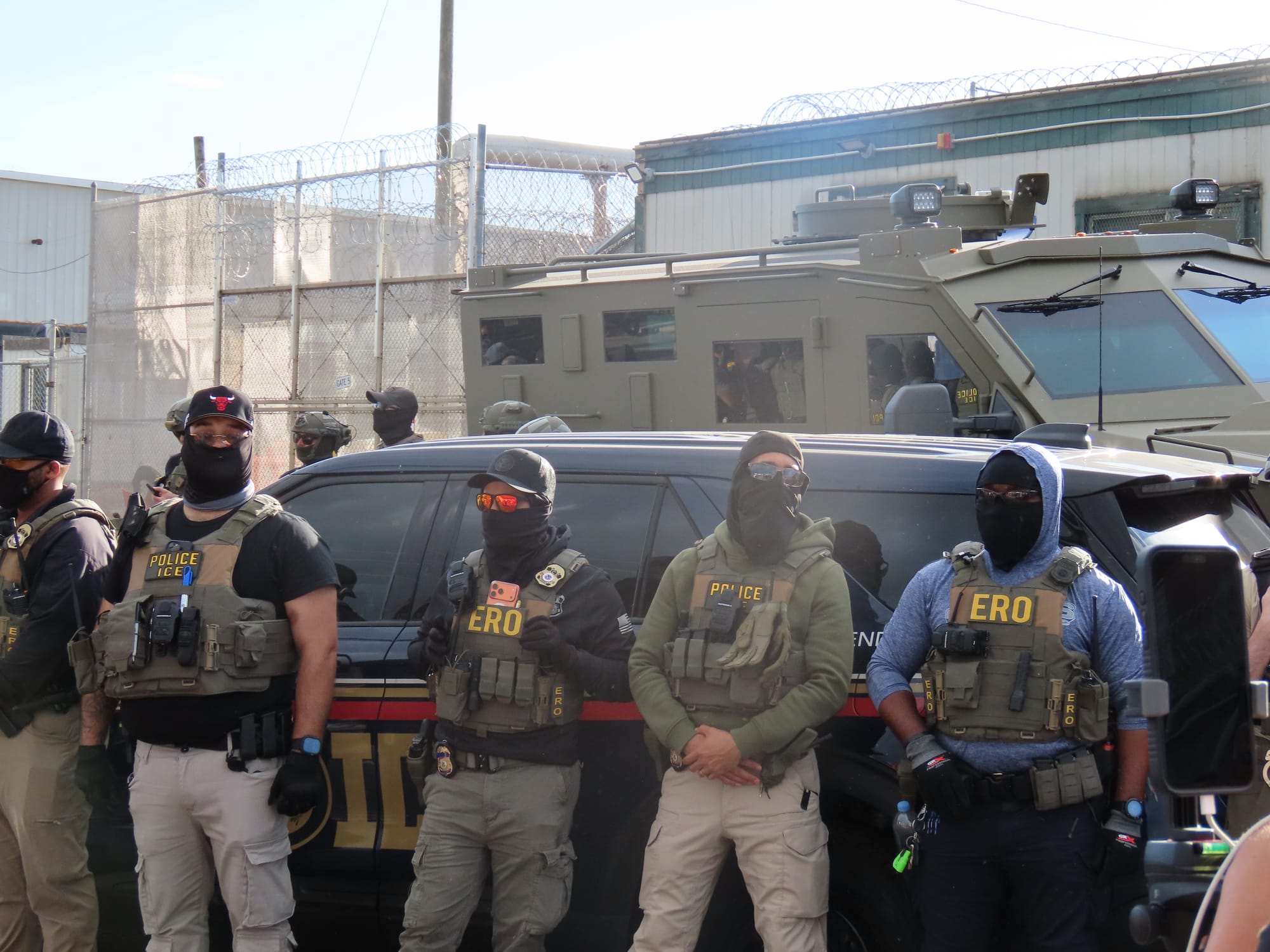
ICE has begun ramping up immigration arrests across the United States. But unlike the highly visible raids that sparked public outcry in places like Minneapolis, many of these arrests are unfolding more quietly, in neighborhood streets, during routine traffic stops, and even at scheduled immigration appointments.
According to a report by The New York Times, the Trump administration has pushed ICE to sharply increase its arrest numbers, with daily arrests reportedly rising from roughly 1,000 a day to about 2,000. In just five days, ICE officials detained 10,000 immigrants as part of that escalation.
But what happens after these arrests? Who remains in detention? Who chooses to self-deport? And who is forcibly removed?
In February, I reported from an immigration court in Batavia New York, tracking what happens after immigrants are detained, the court process, the choices they face, and the uncertainty that follows.
Here’s what I saw and heard from the Batavia Federal Detention Facility in February:
Eight men sit in a small courtroom dressed in short-sleeved prison garb and black Velcro shoes.
The detainees were dressed in one of three colors: blue, orange, or red. The color of each uniform corresponded to the detainee's custody classification.
Blue identified detainees held solely on immigration-related grounds, orange was assigned to those with nonviolent criminal convictions, such as theft. And red was reserved for detainees considered to pose a higher security risk because of violent criminal convictions.
Most of the detainees I observed during my visit were wearing blue, with only a handful seen in passing, dressed in orange.
The two in the back stare at their feet with their heads in their hands. Two in the middle sit quietly, one playing with what appears to be an identification bracelet. Two in the front sit still, one detainee rubbing his eyes, perhaps crying.
The men were prisoners, but they faced no charges and most had never been convicted of a crime. But whether they had legal status to remain in the U.S. was in question, and Immigration and Customs Enforcement officers have incarcerated them at the Batavia Federal Detention Center until they could clarify their status.
Third Country Removals
In the respondent’s chair on this Monday in February, sits the first detainee in a blue jumpsuit. He appears to be in his mid-30s to early 40s. Immigration Court Judge Brian Counihan read him his rights, both with their right hands raised.
“Do you have anything to indicate you are working for the government (Venezuelan)?” the judge asks.
He waits for his interpreter to speak to him. No lawyer is present. No family. Just him, the judge, and the interpreter.
“There was a time when they got me, took all my papers, and really messed me up,” he says, acknowledging that he was an active member of the opposition political party.
“Is there any proof of that?” the judge asks.
“When they got me, they took all evidence that I was a member of that party,” he says with a slight shake in his voice. “They wanted to get rid of any evidence that they harmed me and that I worked for them,” he adds.
DHS argues that there is a safer country that will permit his entry and moves to send him to Ecuador if he cannot prove harm or torture in Venezuela. As of now, he has the option to self-deport to Venezuela, request more time to gather proper documentation for asylum, or accept the motion to be sent to Ecuador, where he was not born and has no family.
“I need time to be able to speak to a lawyer,” he says. “I don’t know anyone in Ecuador. My wife is here.”
The judge adjourns the case and gives him two weeks to gather his documents. He is then escorted from his seat, and another detainee is called to the chair.
Seeking Asylum
The next detainee called up to the chair is able to speak some English, this will be his first appearance and like many in the room - he has no lawyer present and wears a blue jumpsuit.
The judge questions why he has not filed for asylum, explaining the application must be filed within one year. He left Mexico in 2021.
“I don’t understand why your records say I didn’t apply for asylum. In 2024 I applied for asylum and my application is pending,” he says.
Yet according to the DHS, no records exist.
He now will schedule a follow up meeting with the judge for a later date while the papers are looked for.
Another asylum seeker from Turkey, appears before the court with an interpreter and legal counsel. He tells the judge he fears returning home because he is gay. He is also wearing a blue jumpsuit.
"I have experienced harm and mistreatment in Turkey because I am gay," he says.
The judge explains that his testimony alone is not enough to support his claim. He gives him two weeks to submit additional evidence detailing what happened to him, who was responsible, and why he believes he was targeted before the court will move forward with his case.
The Orange Jumpsuit
Appearing before the court is the next detainee in an orange jumpsuit. He is not a U.S. citizen, but he has lived in the United States since he was six years old, after entering from Mexico 21 years ago. No lawyer is present beside him.
He had recently been released from state prison after serving one year for a DWI, his third DWI conviction.
Because of his criminal history and immigration status, the judge tells him he is not eligible to remain in the United States. He was ordered to be removed to Mexico that day and barred from returning to the U.S. for at least five years.
His fiancée is a U.S. citizen. But in court that day, that was not enough to stop his removal.
Editor's Note: The names of the detainees have been withheld to protect their privacy. This article is based on immigration court proceedings observed in February 2026 and is intended to provide readers with an inside look at the immigration court process. It does not reflect the current status or outcome of the individuals' cases.