Dispatches of a CEO
The most important decision

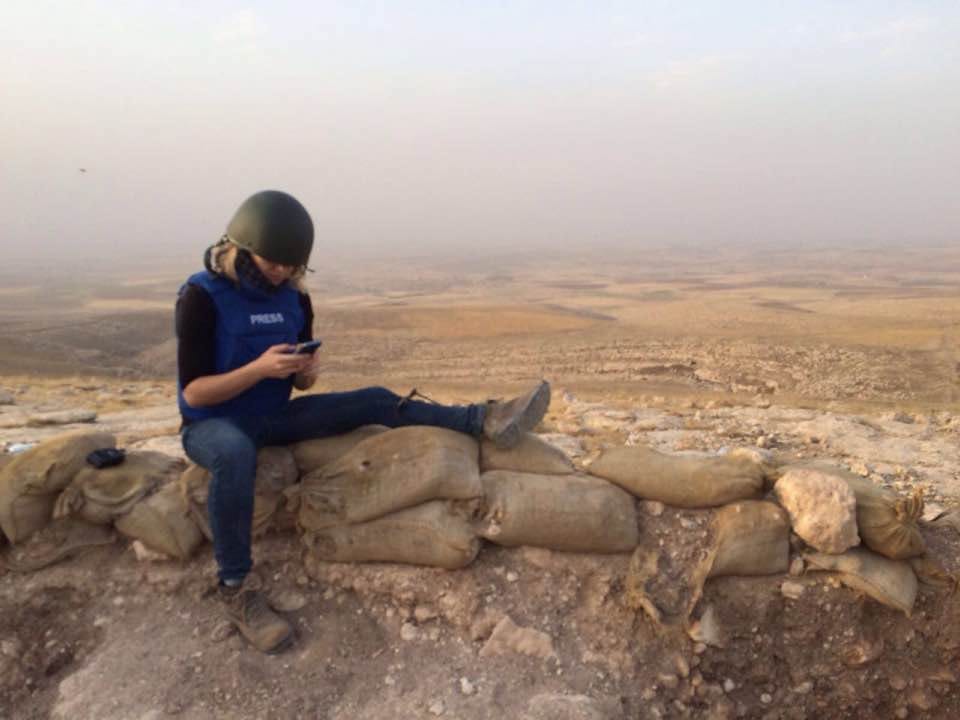
The most important decision I made early on as a founder was to build a platform and not a media company. The means of distribution, and the highways that connect reporters to their consumers. Not the production of content. We would help connect people, but leave the journalism to the journalists. And so, in the ensuing two years I would spend much of my time discussing button colors, swipe up features, and fonts. This was a huge mind shift for someone who had spent 15 years studying and honing craft - storytelling structures, characters, the very best audio editing (secret sauce for TV magazine reporting), contacts, history, and reliable networks of the best people in turbulent places.
At first, when I sat down for zoom meetings with my team of developers, all keen faces on my computer screen in the world of Silicon Valley, I was intimidated. They were the best. Another good decision made on the urging of one of our founding advisors was to spend the money on top developers, a crucial investment for the future. They also looked to me with eagerness to deliver on – I was soon to realize – a plethora of opinions I didn’t yet have. What about account holders? Will they have anonymity? And would the main feed be chronological? How to dismiss a story? How should we think about photographs on bylines? What about categories of stories? Things like button colors and rounded edges verses sharp corners seemed obscenely trivial at first, even irrelevant. But I quickly learned, they aren’t.
And on the other side of those wire frame drawings, and the initially slow and awkward descriptions of what I think, maybe we could have a go at, was the most exciting, and empowering experience of my career: to actually recreate the distribution model of journalism. The entire team leaned in on those calls, and throughout 2024 and 2025 we iterated on building something that redesigned everything. We serve a two-sided market (that’s the business jargon for our model), so must build for top reporters as well as their consumers. For the reporters, it was fun. We hosted reporters in our dev calls to ask their opinion on various features of filing. For the users, we had a bold plan. At a time when people are slinging such vitriol at one another online, how could we reclaim conversation?
We know people want to engage with journalists. And I know journalists so badly want to talk to the public. But from DMs in Instagram to anonymous commenting on stories, reporters have been burned by trolls. What if we could not only solve for this, but we could go further and start hosting real conversation? We discussed methods of incentivizing civility. Should we make it impossible to be anonymous? That didn’t seem fair and many reasonable people prefer to not have a public persona. In the end we decided that comments and questions would not spontaneously appear on or around a story until the journalist decided. We would put the journalist in control. The comment would land in their email inbox, and only be published if and when they decided to respond. Anything abusive could be ignored. And the user who sent the question would get a push notification when the answer was published, not dissimilar to messaging directly with someone in the field. If the reporter is inundated with many questions then can use AI tools to summarize the main themes of what people want to know before they answer.
But what was most exciting, and something my engineering team were remarkably game for when I asked for it, was the possibility of responding with audio messages and video messages. The TV journalist in me knows the intimacy, and immediacy, or video. The foreign correspondent in me knows how practical audio messages are. We as a species of reporter have been sending each other whatsapp voice notes for many years as we bounce around in moving vehicles, run through chaotic streets and communicate with people for whom English is a second language. It made sense. It’s faster for the reporter on the go. And frankly, when I feel like I look like hell on earth bouncing around on assignment, a voice note is welcome over video!
So it turned out, there was a technical feature that I very much had opinions and ideas about. It has now been iterated on by our amazing team, and is also an important of what we are building for our B2B partners in the industry. The Associated Press wrote a lovely piece about this feature.
As we scale and move forward, I’m so excited to help our journalists and the news organizations we work with host these conversations, answer questions, and create that community inside the same place they file their stories, photos, podcasts, and shows. If you have downloaded Noosphere and subscribed, dive in and play with this feature. If you have yet to subscribe, we would love to have you in our community.
Have a terrific weekend.
J